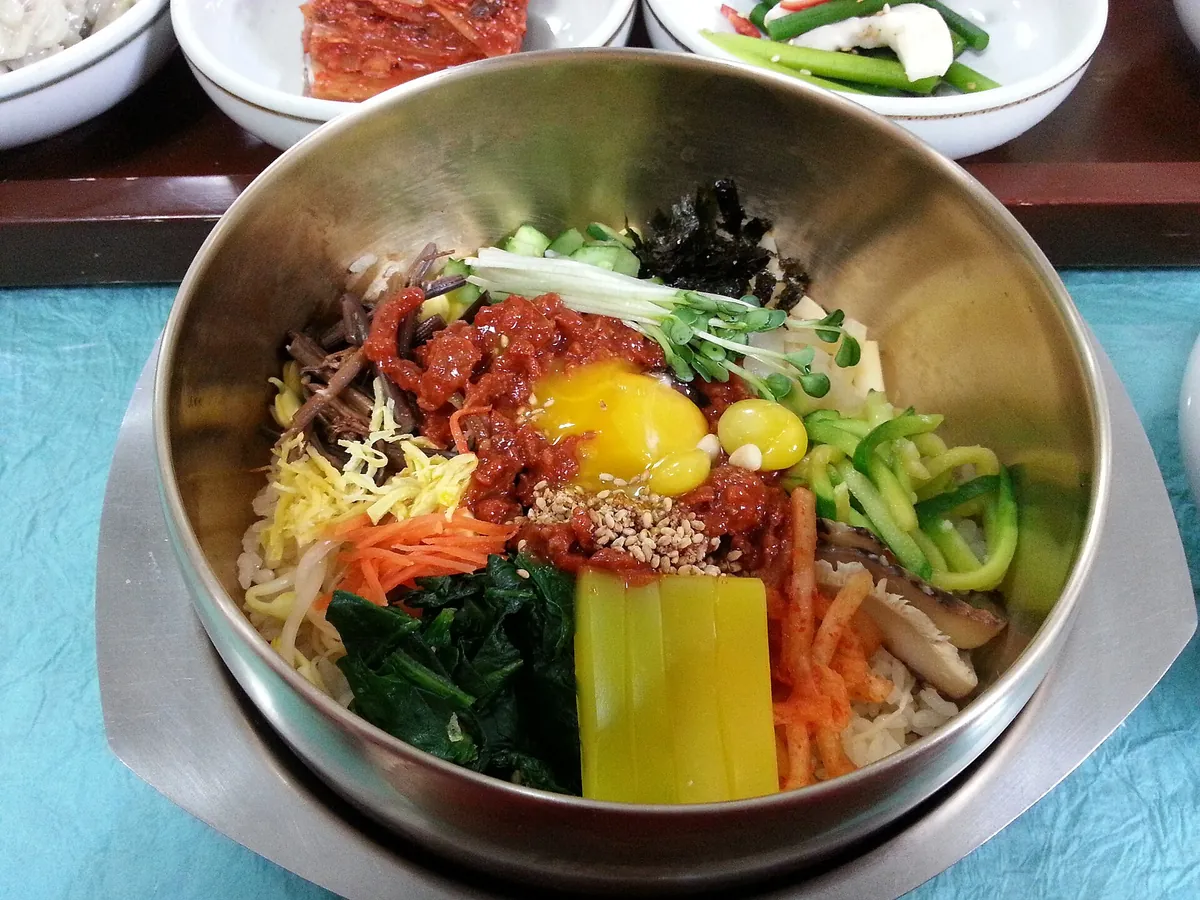
For a quick bite, pick gimbap. For rice and vegetables in one bowl, try bibimbap. At Korean barbecue, grill samgyeopsal and eat it in a leafy wrap, or choose soy-marinated beef bulgogi if you like sweet-savory flavors. In Jeonju, try bibimbap. In Busan, look for pork rice soup and milmyeon. In Jeju, try black pork and pork noodles.
What to eat in Korea today
| If you want… | Try | Check before ordering |
|---|---|---|
| A quick solo bite | Gimbap, bibimbap or kalguksu | Say whether you want takeaway or dine-in. Gimbap is usually ordered by the roll. |
| A barbecue dinner | Samgyeopsal, beef or pork galbi, or bulgogi | Check the minimum order, grams per portion and whether rice is included. |
| Less chili heat | Soy-marinated beef bulgogi, seolleongtang or samgyetang | Ask separately about chili seasoning and kimchi sides. |
| A few market snacks | Tteokbokki, eomuk, bindaetteok or hotteok | Check whether the price is per plate or piece, and ask about heat and fillings. |
Sources: Korea Tourism Organization · Classic Korean dishes and street snacks · Korea Tourism Organization · Korean table setting, pork belly and leaf wraps · Korea Tourism Organization · Bulgogi seasoning and preparation
김밥 Gimbap (Kimbap) · seaweed rice rolls
Gimbap is a seaweed roll sliced into bites, with rice and fillings such as pickled radish, carrots and egg. A basic roll may still have ham or imitation crab, while tuna rolls often contain mayonnaise. Convenience-store samgak gimbap is a packaged triangular rice ball with a filling.
At a gimbap or bunsik shop, show 기본 김밥 한 줄 포장해 주세요 to ask for one classic roll to go. Try bite-sized rolls at Seoul’s Gwangjang Market or look for Oneunjeong Gimbap in Seogwipo, Jeju. Check the shop’s takeaway ordering and pickup instructions.
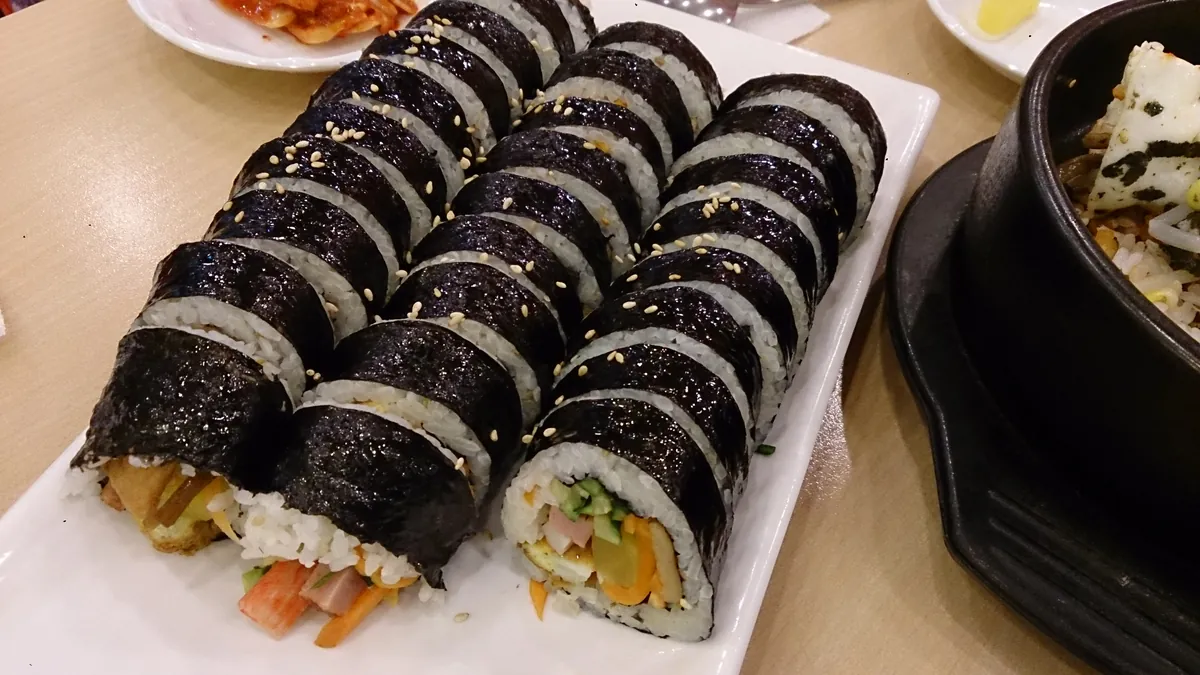
Slices of gimbap showing rice and fillings rolled in seaweed
ProjectManhattan · CC0 · 2013Sources: Korea Tourism Organization · Classic Korean dishes and street snacks · Korea Tourism Organization · Ordering vegetarian food in Korea · Korea Tourism Organization · Convenience-store triangle gimbap and ramyeon · Korea Tourism Organization · Gimbap, mung bean pancakes and yukhoe at Gwangjang Market · Korea Tourism Organization · Oneunjeong Gimbap in Seogwipo: menu and takeaway
비빔밥 Bibimbap · mixed rice and vegetables
Bibimbap brings rice, seasoned vegetables and other toppings together with gochujang or the restaurant’s own sauce. Dolsot bibimbap comes in a hot stone bowl that can crisp the rice at the bottom. Jeonju-style bowls may come with raw beef, cooked beef or egg, depending on the restaurant.
Ask 고추장은 따로 주세요 to have the chili paste on the side. If you avoid animal products or raw meat, check the toppings, stock and what the rice was cooked in. The stone bowl stays hot, so avoid touching its rim while mixing.
Sources: Korea Tourism Organization · Bibimbap ingredients and varieties · Korea Tourism Organization · Jeonju bibimbap · Korea Tourism Organization · Ordering vegetarian food in Korea
삼겹살 Samgyeopsal · Korean pork belly barbecue
Samgyeopsal is pork belly with layers of meat and fat. At a Korean barbecue restaurant, it is grilled and cut into bites, often with lettuce, perilla leaves, ssamjang and garlic. Staff grill it at some restaurants, while diners cook it themselves at others.
Check the weight and price per serving, minimum first order and any charges for rice or stew. If you grill it yourself, use separate tongs for raw meat and cook the pork through. At a Jeju black-pork restaurant, ask whether the cut is belly or neck.
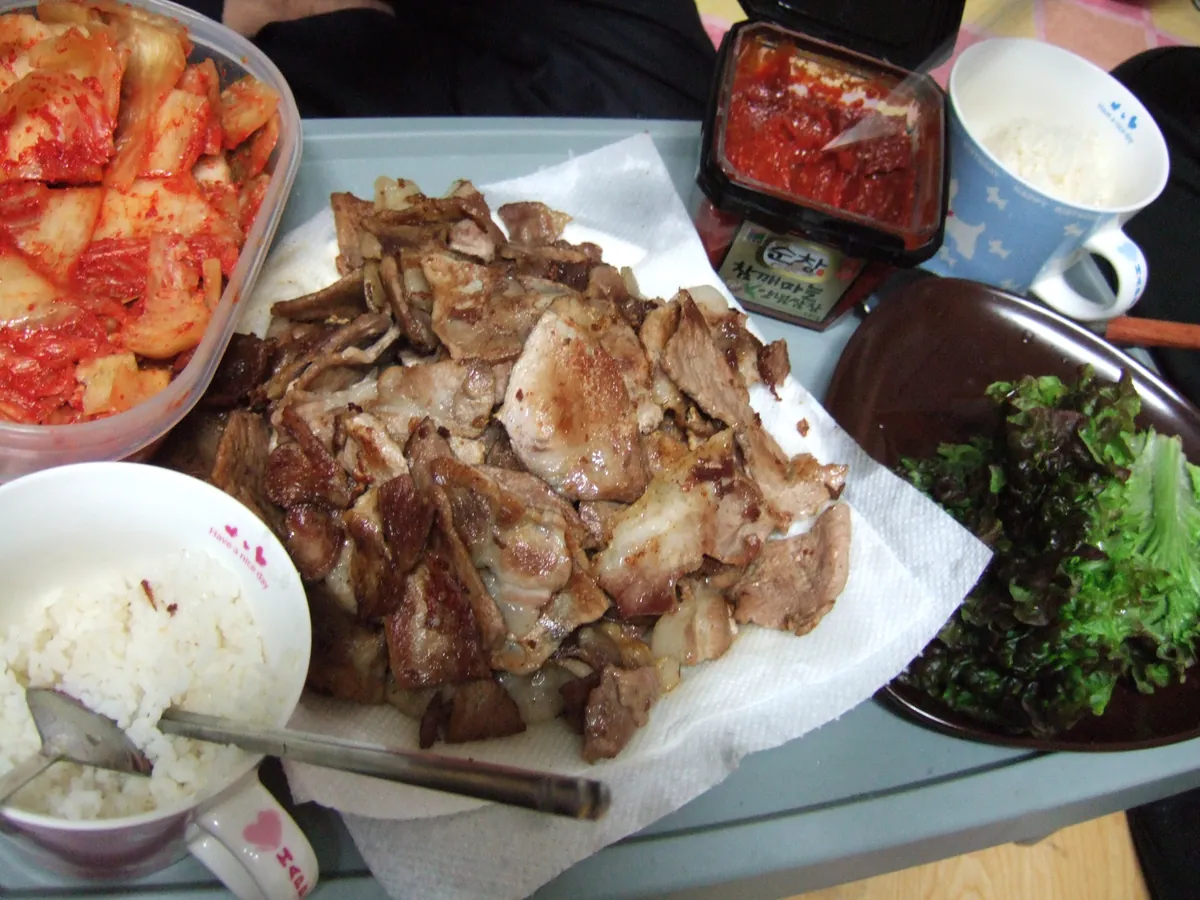
Grilled pork belly served with rice, kimchi and leafy greens
정희 강 · CC BY 2.0 · 2008Sources: Korea Tourism Organization · Korean table setting, pork belly and leaf wraps · Food Safety Korea · Cooking thoroughly and separating utensils · Korea Tourism Organization · Jeju black pork and pork noodles
불고기 Bulgogi · sweet-savory marinated meat
Beef bulgogi is thinly sliced beef seasoned with ingredients such as soy sauce, garlic and sugar, then grilled or cooked with broth. Some Seoul-style versions include mushrooms and scallions in a shallow broth. Pork bulgogi may be made with soy sauce or chili paste, so check which version the menu offers.
If you are eating alone, ask 불고기덮밥 있나요? for a bulgogi rice bowl. When sharing a hot pot or ordering a set, ask about minimum portions and whether it includes rice. If you avoid wheat or soy, check the sauce ingredients before ordering.
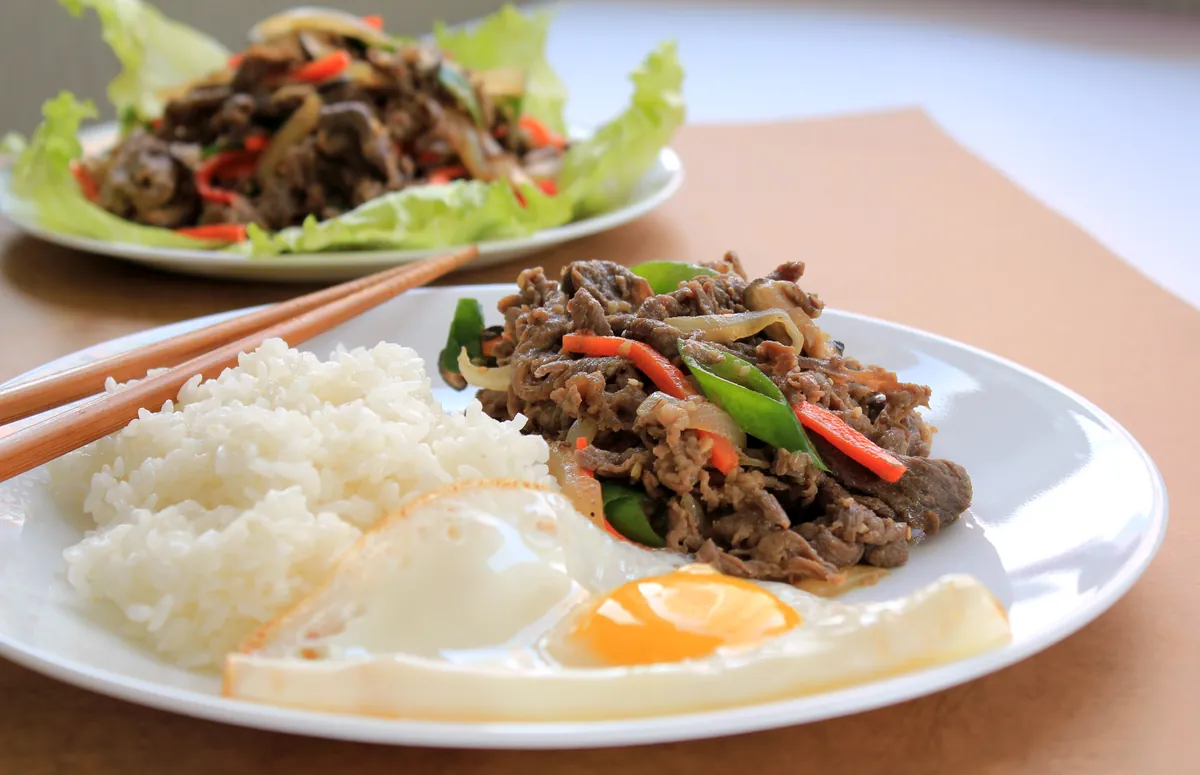
Thinly sliced beef bulgogi served with rice and a fried egg
Chloe Lim · CC BY 2.0 · 2013Sources: Korea Tourism Organization · Bulgogi seasoning and preparation · Korea Tourism Organization · Bulgogi rice bowls and soy marinade · Korea Tourism Organization · Spicy stir-fried pork · Food Safety Korea · Allergen labels and possible cross-contact
Rice, set meals & sides
| Dish | Ingredients & flavor | Where & how to order |
|---|---|---|
| 쌈밥 · Ssambap · leaf wraps and rice | A meal of leafy greens to wrap around rice and sides. Meat and fish options vary by restaurant. | Ask a ssambap restaurant what the set includes and its minimum party size. The Gyeongju food guide has an example. |
| 한정식·백반 · Hanjeongsik & baekban · set meals | Both bring rice, soup and sides. Baekban often describes a home-style meal, while hanjeongsik may include a wider spread or multiple courses. | Ask the Korean restaurant about today’s main dish, the per-person price and whether it serves one diner. |
| 잡채 · Japchae · tossed glass noodles | Sweet-savory sweet-potato glass noodles tossed with vegetables, sometimes with beef. | Look for it in a Korean set meal or a side-dish shop. Ask about meat and soy sauce if needed. |
| 김치 · Kimchi · fermented vegetables | Napa cabbage kimchi, cubed radish kimchi and white kimchi differ in heat and sourness. | Try it as a side dish or buy it at a market. Ask about fermented seafood and fish sauce if you are vegetarian. |
Sources: Korea Tourism Organization · Gyeongju leaf wraps and rice · Korea Tourism Organization · Korean table setting, pork belly and leaf wraps · Korea Tourism Organization · Japchae · Korea Tourism Organization · Kimchi and holiday cooking
Barbecue, meat & chicken
| Dish | Ingredients & flavor | Where & how to order |
|---|---|---|
| 갈비 · Galbi · short ribs | Grilled beef or pork ribs. Saeng-galbi is unmarinated and yangnyeom-galbi is usually sweet and savory. | At a barbecue restaurant, distinguish beef from pork and unmarinated from marinated ribs. |
| 갈비찜 · Galbijjim · braised short ribs | Short ribs braised until tender, with soy-based and spicy versions. | Ask which meat is served, how spicy it is and how many people the portion feeds. |
| 제육볶음 · Jeyuk-bokkeum · spicy pork stir-fry | Thin slices of pork stir-fried in a spicy sauce, often eaten with rice. | Look for a jeyuk set at a home-style restaurant and ask whether rice is included. |
| 닭갈비 · Dakgalbi · spicy chicken | Chicken and vegetables cooked in a spicy sauce on a griddle, or chicken grilled over charcoal. | Choose griddle or charcoal style at a dakgalbi restaurant or Chuncheon’s Dakgalbi Street. Ask if you can finish a griddle meal with fried rice. |
| 닭볶음탕 · Dakbokkeumtang · spicy braised chicken | Chicken, potatoes and onion simmered in a spicy sauce, often using bone-in pieces. | At a Korean restaurant, ask about the pot size and heat. Rice or extra noodles can go with it. |
| 보쌈 · Bossam · boiled pork with wraps | Slices of boiled pork served with cabbage or leafy wraps and bossam kimchi. | At a bossam restaurant, look for platter sizes or an individual set. Gul-bossam includes oysters. |
| 족발 · Jokbal · braised pig’s trotters | Soy-braised pig’s trotters, served sliced, with a springy texture where the skin is attached. | At a jokbal shop, distinguish regular jokbal from spicy bul-jokbal and choose a platter size for sharing. |
| 한국식 치킨 · Korean fried chicken | Common choices include plain crispy fried chicken, yangnyeom glazed chicken and soy-sauce styles. | Choose bone-in or boneless and a flavor. Ask for banban if you want a half-and-half order. |
| 막창구이 · Makchang-gui · grilled offal | A cut of offal grilled at the table. Its flavor and texture vary with the animal and cut. | At a Daegu makchang shop, ask whether it is pork or beef, whether it comes partly grilled and what one portion weighs. |
Sources: Korea Tourism Organization · Marinated beef short ribs · Korea Tourism Organization · Suwon wanggalbi and ways to prepare ribs · Korea Tourism Organization · Spicy stir-fried pork · Korea Tourism Organization · Chuncheon dakgalbi · Korea Tourism Organization · Spicy braised chicken · Korea Tourism Organization · Jokbal and bossam · Korea Tourism Organization · Korean fried chicken · Korea Tourism Organization · Daegu makchang and local specialties
Rice soups, broths & stews
| Dish | Ingredients & flavor | Where & how to order |
|---|---|---|
| 돼지국밥 · Dwaeji-gukbap · pork and rice soup | Pork broth with sliced meat and rice. Busan shops may list meat, offal and sundae versions separately. | Ask a Busan gukbap shop for meat only if you prefer, and add chili seasoning or salted shrimp gradually. |
| 콩나물국밥 · Kongnamul-gukbap · bean sprout rice soup | Rice soup with crisp bean sprouts. How egg and seaweed are served varies by shop. | In Jeonju, ask how to eat the accompanying egg and whether the stock contains anchovies or seafood. |
| 김치찌개 · Kimchi-jjigae · kimchi stew | A tangy, often spicy stew of fermented kimchi, with combinations such as pork, tuna or tofu. | Ask the restaurant what meat and broth it uses and whether rice comes with the stew. |
| 된장찌개 · Doenjang-jjigae · soybean paste stew | A savory fermented soybean paste stew often made with tofu and vegetables such as squash. | Find it at set-meal and barbecue restaurants. For vegetarian needs, ask about anchovy, shellfish or meat stock. |
| 순두부찌개 · Sundubu-jjigae · soft tofu stew | Stew with soft tofu. Red versions may include clams, pork or egg. | Ask about heat and ingredients. In Gangneung’s Chodang district, plain tofu and spicy jjamppong sundubu are different orders. |
| 부대찌개 · Budae-jjigae · sausage and kimchi stew | A spicy stew with ham, sausage and kimchi, sometimes with an extra portion of ramyeon noodles. | At a budae-jjigae restaurant, check whether the order is per person or per pot and if extra noodles are included. |
| 삼계탕 · Samgyetang · ginseng chicken soup | Soup with a small whole chicken, often stuffed with sticky rice and simmered with ginseng and aromatics. | At a samgyetang restaurant, pull the meat off the bones and eat the sticky rice from inside the chicken. |
| 설렁탕 · Seolleongtang · ox-bone soup | Milky ox-bone broth, served with sliced meat and sometimes noodles. | Taste the broth first at a seolleongtang shop, then add salt or scallions a little at a time. |
| 갈비탕 · Galbitang · beef short rib soup | Beef short ribs in a clear, savory broth. Pull the meat from the bone and eat it with rice. | Order a bowl at a rib or soup restaurant and ask about glass noodles or egg garnish if needed. |
| 육개장 · Yukgaejang · spicy beef soup | A spicy red broth with shredded beef and vegetables. | Ask the restaurant about the heat. In Daegu, look for ttaro-gukbap, with rice served separately. |
| 감자탕 · Gamjatang · pork-backbone stew | A hearty stew of pork backbone, potatoes and vegetables. Pick the meat from between the bones. | Share a pot at a gamjatang shop, or ask about a one-person bowl such as ppyeo-haejangguk. |
| 떡국 · Tteokguk · sliced rice cake soup | Sliced rice cakes in a savory broth, traditionally eaten at Seollal. Tteok-mandutguk adds dumplings. | Look for it at Korean restaurants or dumpling shops. Ask about the broth and dumpling filling. |
Sources: Korea Tourism Organization · Busan pork and rice soup · Korea Tourism Organization · Regional specialties and restaurants · Korea Tourism Organization · Kimchi stew · Korea Tourism Organization · Soybean paste stew · Korea Tourism Organization · Soft tofu stew · Korea Tourism Organization · Budae-jjigae · Korea Tourism Organization · Ginseng chicken soup, cold noodles and bingsu · Korea Tourism Organization · Ox-bone soup · Korea Tourism Organization · Beef short rib soup · Korea Tourism Organization · Spicy beef soup · Korea Tourism Organization · Pork-backbone stew · Korea Tourism Organization · Rice cake soup and holiday foods
Noodles & dumplings
| Dish | Ingredients & flavor | Where & how to order |
|---|---|---|
| 냉면 · Naengmyeon · cold noodles | Mul-naengmyeon comes in cold broth, while bibim-naengmyeon is tossed in sauce. Noodle texture and flour blends vary. | At a noodle or barbecue restaurant, ask if the chili seasoning can come on the side with your cold broth noodles. |
| 밀면 · Milmyeon · cold wheat noodles | A Busan-style cold wheat noodle dish, served either in chilled broth or with tangy chili sauce. | Choose mul or bibim at a Busan milmyeon shop and ask whether warm broth or dumplings are available. |
| 칼국수 · Kalguksu · knife-cut noodle soup | Warm knife-cut wheat noodles. The soup varies by shop and region, with chicken, clams, anchovies or perilla among the possibilities. | Choose the broth at a market stall or a noodle shop. The same dish name can come with a different broth. |
| 콩국수 · Kongguksu · noodles in cold soy broth | A summer noodle dish in a cold, creamy broth made from ground soybeans. | Check seasonal availability at a noodle shop. Taste the broth before adding salt or sugar. |
| 짜장면 · Jjajangmyeon · black bean sauce noodles | Noodles mixed with a sweet-savory sauce made with fried black bean paste, often with pork. | Consider it at a Korean-Chinese restaurant if you want less heat than jjamppong. Ask whether the sauce contains pork. |
| 짬뽕 · Jjamppong · spicy noodle soup | A spicy Korean-Chinese noodle soup often made with vegetables and seafood. Stock or toppings can also contain meat. | Ask a Korean-Chinese restaurant how hot it is and whether it contains shellfish, shrimp or squid. |
| 라면 · Ramyeon · instant noodles | Instant noodles sold in cups or packets. Heat and seasoning ingredients vary by product. | Follow the fill line or cooker instructions at the convenience store. Check the ingredient label on the package. |
| 만두 · Mandu · dumplings | Dumplings filled with combinations of meat, tofu, vegetables or kimchi. Jjin-mandu is steamed and gun-mandu is pan-fried. | At a snack shop or dumpling restaurant, choose from options such as meat or kimchi and ask what is in the filling. |
Sources: Korea Tourism Organization · Naengmyeon · Korea Tourism Organization · Spicy mixed wheat noodles · Korea Tourism Organization · Knife-cut noodles and broth varieties · Korea Tourism Organization · Ginseng chicken soup, cold noodles and bingsu · Korea Tourism Organization · Black bean noodles and spicy noodle soup · Korea Tourism Organization · Convenience-store triangle gimbap and ramyeon · Korea Tourism Organization · Mandu fillings and cooking styles
Market snacks & desserts
| Dish | Ingredients & flavor | Where & how to order |
|---|---|---|
| 떡볶이 · Tteokbokki · rice cakes in sauce | Chewy rice cakes cooked in a sweet and spicy sauce, sometimes with fish cake. | Ask a snack shop or market stall about heat and portion size. Sundae and fried snacks are common sides. |
| 어묵 · Eomuk · fish cake | A snack made from fish paste, sold on skewers in broth or fried to take away. | At a Busan market or snack stall, ask the price per skewer and whether broth comes with it. |
| 순대 · Sundae · Korean blood sausage | A sausage made with pork casing and fillings such as glass noodles. It can contain blood, and some servings include offal. | At a market or snack shop, say 순대만 주세요 to ask for sausage without the offal side. |
| 튀김 · Twigim · battered fried snacks | Battered and fried snacks such as sweet potato, squid or glass noodles wrapped in seaweed. | Choose pieces and fillings at a snack stall. Ask about shared frying oil if ingredients matter to you. |
| 빈대떡·파전 · Bindaetteok & pajeon · savory pancakes | Bindaetteok uses ground mung beans, while pajeon features scallions. Meat, seafood or egg may be added. | Look for bindaetteok at Gwangjang Market and pajeon at pancake restaurants. Ask which seafood is used in haemul pajeon. |
| 호떡 · Hotteok · sweet griddle cake | A griddled cake with sweet syrup inside. Busan’s seed hotteok adds seeds or nuts. | Ask the market stall what is inside and let the hot syrup cool before taking a bite. |
| 붕어빵 · Bungeoppang · fish-shaped pastry | A pastry baked in a fish-shaped mold, often filled with red bean paste or custard. | At a cold-weather stall, choose red bean or custard and ask which fillings are available. |
| 계란빵 · Gyeranppang · egg bread | A warm baked snack with a whole egg on a lightly sweet batter. | Pick up a single piece at a street stall. Ask about the batter as well as the egg if ingredients matter. |
| 한국식 핫도그 · Korean corn dog | A sausage, mozzarella or both on a skewer, battered and fried. Some versions have potato cubes on the outside. | Choose the filling and whether you want sugar or sauce at the snack stall. |
| 빙수 · Bingsu · shaved ice | Finely shaved ice topped with red beans, rice cake or fruit. Some cafés shave a frozen milk base. | Check the serving size and ask whether the café uses milk or condensed milk. |
| 약과 · Yakgwa · syrup-soaked cookie | A traditional deep-fried wheat cookie soaked in honey or syrup. | Compare single pieces and gift boxes at a market or sweets shop, and check the ingredient list. |
| 식혜 · Sikhye · sweet rice punch | A sweet drink made with malt and cooked rice, often with grains left in the cup. | Look for it chilled at a market or convenience store. Check the ingredient list on packaged versions. |
Sources: Korea Tourism Organization · Classic Korean dishes and street snacks · Korea Tourism Organization · Busan fish cakes and seed hotteok · Korea Tourism Organization · Sundae and Sundae Town · Korea Tourism Organization · Gimbap, mung bean pancakes and yukhoe at Gwangjang Market · Korea Tourism Organization · Ginseng chicken soup, cold noodles and bingsu · Korea Tourism Organization · Yakgwa and Korean desserts · Korea Tourism Organization · Sweet rice punch
Seafood & Jeju specialties
| Dish | Ingredients & flavor | Where & how to order |
|---|---|---|
| 회·물회 · Hoe & mulhoe · raw fish | Hoe is sliced raw fish. Mulhoe serves fish or other seafood with a cold broth and vegetables. | Ask a seafood restaurant about the fish species, pricing unit and any table charge. Ask for grilled fish if you want a cooked dish. |
| 간장게장 · Ganjang-gejang · soy-marinated crab | Raw crab marinated in soy sauce, commonly eaten with rice to balance the salty marinade. | Ask the shop which crab it serves, whether the price covers one portion or a set, and what sides come with it. |
| 전복죽 · Jeonbokjuk · abalone porridge | Rice simmered to a soft porridge with abalone. Using the innards changes the color and flavor. | At a Jeju abalone restaurant or porridge shop, choose jeonbokjuk if you prefer a softer texture to abalone stone-pot rice. |
| 제주 고기국수 · Jeju gogi-guksu · pork noodles | A Jeju-style bowl of noodles in pork broth topped with sliced pork. | At a Jeju noodle shop, distinguish gogi-guksu in broth from bibim-guksu tossed in sauce. |
Sources: Korea Tourism Organization · Raw fish, mulhoe and grilled fish at Jagalchi · Korea Tourism Organization · Soy-marinated crab · Korea Tourism Organization · Jeju abalone porridge and stone-pot rice · Korea Tourism Organization · Jeju black pork and pork noodles
What to eat by city
| City | What to try | Where to look |
|---|---|---|
| Seoul | Seolleongtang, mini gimbap and mung bean pancakes | Try ox-bone soup in Jongno and pick up snacks at Gwangjang Market. |
| Busan | Pork and rice soup, milmyeon, fish cake and seed hotteok | Try soup in Seomyeon and look for market snacks around Nampo and Jagalchi. |
| Daegu | Makchang barbecue, ttaro-gukbap, flat dumplings and tteokbokki | Pick up snacks on a Dongseong-ro or Seomun Market visit and try grilled makchang for dinner. |
| Jeju | Black pork, pork noodles, abalone porridge and Seogwipo gimbap | Try pork noodles in Jeju City, abalone in eastern Gujwa and gimbap in central Seogwipo. |
| Jeonju | Jeonju bibimbap and bean sprout rice soup | Choose between a full meal and a bowl of soup around the Hanok Village and Nambu Market. |
| Gangneung | Chodang soft tofu, kalguksu and potato dumpling soup | Try the Chodang tofu district and the streets around Jungang Market. |
| Gyeongju | Leaf wraps with rice and Korean set meals | After exploring the central historic sites, ask a ssambap restaurant what meats and sides come with the set. |
Sources: Korea Tourism Organization · Gimbap, mung bean pancakes and yukhoe at Gwangjang Market · Korea Tourism Organization · Ox-bone soup · Korea Tourism Organization · Busan pork and rice soup · Korea Tourism Organization · Spicy mixed wheat noodles · Korea Tourism Organization · Busan fish cakes and seed hotteok · Korea Tourism Organization · Daegu makchang and local specialties · Korea Tourism Organization · Jeju black pork and pork noodles · Korea Tourism Organization · Jeju abalone porridge and stone-pot rice · Korea Tourism Organization · Oneunjeong Gimbap in Seogwipo: menu and takeaway · Korea Tourism Organization · Jeonju bibimbap · Korea Tourism Organization · Regional specialties and restaurants · Korea Tourism Organization · Gangneung potato dumpling soup · Korea Tourism Organization · Gyeongju leaf wraps and rice
Solo meals, takeaway and dietary needs
On a menu, 1인분 means one portion and may be a unit of meat. Ask about the minimum barbecue order or whether a market price is per piece, skewer or plate. Check whether extra rice or sides cost more.
For vegetarian meals, check the stock, any fermented seafood in kimchi and the sauces. If you have a food allergy, show the ingredient name in writing and ask about shared grills, oil and utensils. If you need halal certification, check KTO’s categories and confirm the restaurant’s current certification.
| Situation | Show this in Korean | Meaning |
|---|---|---|
| Eating alone | 한 명인데 1인분 주문할 수 있어요? | Can I order one serving as a solo diner? |
| Takeaway | 한 줄 포장해 주세요. | One roll to go, please. |
| Chili heat | 양념은 따로 주세요. | Please put the sauce on the side. |
| Vegetarian ingredients | 고기, 달걀, 해산물 없이 가능해요? 육수와 소스도 확인해 주세요. | Can this be made without meat, eggs or seafood? Please check the stock and sauce too. |
| Allergy | 저는 ___ 알레르기가 있어요. 같은 기름이나 조리 도구를 쓰나요? | I am allergic to ___. Do you use the same oil or cooking utensils? |
Sources: Korea Tourism Organization · Korean table setting, pork belly and leaf wraps · Korea Tourism Organization · Ordering vegetarian food in Korea · Korea Tourism Organization · Muslim-friendly restaurant categories and certification · Food Safety Korea · Allergen labels and possible cross-contact
A few good questions
What can I order in Korea if I avoid spicy food?
Try soy-marinated beef bulgogi, seolleongtang or samgyetang. Ask for bibimbap’s chili paste on the side and check whether the meal comes with chili seasoning or spicy sides.
Are gimbap and bibimbap vegetarian?
Gimbap may have ham, imitation crab or egg, while bibimbap can contain meat, egg or animal-based broth. Ask about fillings, rice, sauces and sides before ordering.
What is the difference between samgyeopsal and bulgogi?
Samgyeopsal names the pork-belly cut often grilled at the table. Bulgogi is a seasoned meat dish. Beef bulgogi commonly uses a soy marinade, while some pork versions use chili.
Can a solo diner order samgyeopsal?
It depends on the restaurant. Ask if it seats solo diners and what the minimum first order is. For a smaller meal, look for a bulgogi rice bowl or an individual meat set.
Sources & review dates
Links lead to the responsible organisations. Some source pages may be in a different language.
Published · Updated
- Korea Tourism Organization · Korean table setting, pork belly and leaf wrapsChecked 2026-11-15
- Korea Tourism Organization · Classic Korean dishes and street snacksChecked 2026-11-15
- Korea Tourism Organization · Bibimbap ingredients and varietiesChecked 2026-11-15
- Korea Tourism Organization · Jeonju bibimbapChecked 2026-11-15
- Korea Tourism Organization · Bulgogi seasoning and preparationChecked 2026-11-15
- Korea Tourism Organization · Bulgogi rice bowls and soy marinadeChecked 2026-11-15
- Korea Tourism Organization · JapchaeChecked 2026-11-15
- Korea Tourism Organization · Kimchi and holiday cookingChecked 2026-11-15
- Korea Tourism Organization · Convenience-store triangle gimbap and ramyeonChecked 2026-11-15
- Korea Tourism Organization · Oneunjeong Gimbap in Seogwipo: menu and takeawayChecked 2026-11-15
- Korea Tourism Organization · Gimbap, mung bean pancakes and yukhoe at Gwangjang MarketChecked 2026-11-15
- Korea Tourism Organization · Busan fish cakes and seed hotteokChecked 2026-11-15
- Korea Tourism Organization · Busan pork and rice soupChecked 2026-11-15
- Korea Tourism Organization · Regional specialties and restaurantsChecked 2026-11-15
- Korea Tourism Organization · Gyeongju leaf wraps and riceChecked 2026-11-15
- Korea Tourism Organization · Daegu makchang and local specialtiesChecked 2026-11-15
- Korea Tourism Organization · Jeju black pork and pork noodlesChecked 2026-11-15
- Korea Tourism Organization · Jeju abalone porridge and stone-pot riceChecked 2026-11-15
- Korea Tourism Organization · Marinated beef short ribsChecked 2026-11-15
- Korea Tourism Organization · Beef short rib soupChecked 2026-11-15
- Korea Tourism Organization · Suwon wanggalbi and ways to prepare ribsChecked 2026-11-15
- Korea Tourism Organization · Spicy beef soupChecked 2026-11-15
- Korea Tourism Organization · Spicy braised chickenChecked 2026-11-15
- Korea Tourism Organization · Spicy stir-fried porkChecked 2026-11-15
- Korea Tourism Organization · Chuncheon dakgalbiChecked 2026-11-15
- Korea Tourism Organization · Jokbal and bossamChecked 2026-11-15
- Korea Tourism Organization · Kimchi stewChecked 2026-11-15
- Korea Tourism Organization · Soybean paste stewChecked 2026-11-15
- Korea Tourism Organization · Soft tofu stewChecked 2026-11-15
- Korea Tourism Organization · Budae-jjigaeChecked 2026-11-15
- Korea Tourism Organization · Ginseng chicken soup, cold noodles and bingsuChecked 2026-11-15
- Korea Tourism Organization · Ox-bone soupChecked 2026-11-15
- Korea Tourism Organization · Pork-backbone stewChecked 2026-11-15
- Korea Tourism Organization · Rice cake soup and holiday foodsChecked 2026-11-15
- Korea Tourism Organization · NaengmyeonChecked 2026-11-15
- Korea Tourism Organization · Spicy mixed wheat noodlesChecked 2026-11-15
- Korea Tourism Organization · Knife-cut noodles and broth varietiesChecked 2026-11-15
- Korea Tourism Organization · Black bean noodles and spicy noodle soupChecked 2026-11-15
- Korea Tourism Organization · Korean fried chickenChecked 2026-11-15
- Korea Tourism Organization · Mandu fillings and cooking stylesChecked 2026-11-15
- Korea Tourism Organization · Gangneung potato dumpling soupChecked 2026-11-04
- Korea Tourism Organization · Sundae and Sundae TownChecked 2026-11-15
- Korea Tourism Organization · Yakgwa and Korean dessertsChecked 2026-11-15
- Korea Tourism Organization · Sweet rice punchChecked 2026-11-15
- Korea Tourism Organization · Raw fish, mulhoe and grilled fish at JagalchiChecked 2026-11-15
- Korea Tourism Organization · Soy-marinated crabChecked 2026-11-15
- Korea Tourism Organization · Ordering vegetarian food in KoreaChecked 2026-11-15
- Korea Tourism Organization · Muslim-friendly restaurant categories and certificationChecked 2026-11-15
- Food Safety Korea · Allergen labels and possible cross-contactChecked 2026-11-15
- Food Safety Korea · Cooking thoroughly and separating utensilsChecked 2026-11-15